
Analysis on the Development of the Microcrystalline Stone Industry
2026-08-28
Shanghai Jiani Material Technology is a professional company specializing in the production of stone tiles.
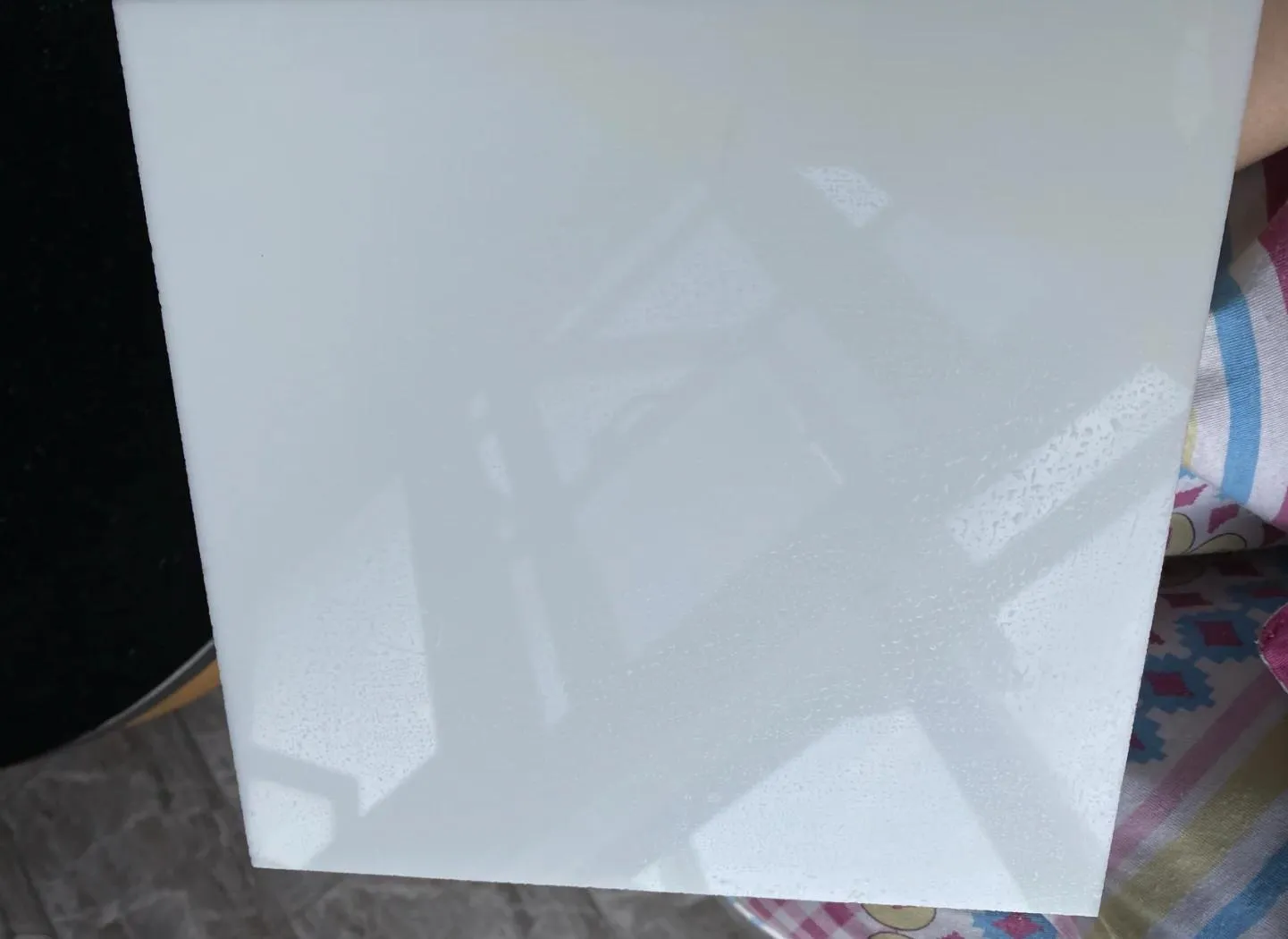
Natural stone often undergoes weathering due to its porous structure and joints and fissures, and acid rain caused by modern human activities has intensified this weathering reaction. Owing to the unique crystallization habit of microcrystalline stone, its finished surface forms needle-like crystalline patterns. Meanwhile, the translucent glass matrix creates a glossy surface, endowing it not only with exquisite patterns but also far higher glossiness than natural stone. Moreover, as an artificially manufactured product, it eliminates the color difference that natural stone cannot overcome.
Excellent Physical, Chemical and Mechanical Properties
Specifically, its advantages are as follows:
It boasts a naturally soft texture. Microcrystalline stone is a material sintered and crystallized at high temperatures similar to the formation conditions of granite. Although the surface finish of polished panels is much higher than that of stone, its special microcrystalline structure produces a uniform and harmonious diffuse reflection of light from any angle, forming a naturally soft texture.
It features a rich palette of colors. Produced via a special high-temperature sintering process, microcrystalline stone is a homogeneous material free of tiny cracks that cause natural stone to fracture. This manufacturing process enables the creation of a wide range of tones, with white as the base color forming an abundant color system; among these, white, beige and gray are the three most widely adopted color families by designers.
It exhibits outstanding weather resistance and durability. Its acid and alkali resistance outperforms granite and marble. As an inorganic material with superior chemical stability, it will not deteriorate, fade or lose strength even when exposed to wind, rain and polluted air for a long time. With zero water absorption, it is resistant to contamination, free from risks of frost damage and infiltration of rust, concrete slurry and gray pollutants, thus eliminating the efflorescence problem common in natural stone. Dirt adhering to its surface can also be easily wiped off.
It has high strength and can be lightweighted. Harder and less prone to damage than natural stone, microcrystalline stone allows for adjustable thickness to adapt to construction methods, aligning with the modern trend of lightweight yet robust building materials. Practical engineering applications have verified that microcrystalline stone can be used in all scenarios where natural stone is applicable. Its hanging and laying methods are identical to those of natural stone. Thanks to its excellent mechanical properties, curved cylindrical panels can be thermally bent and formed, further realizing lightweight design.
Shortcomings in Industrial Development
For all its aesthetic merits, microcrystalline stone still has certain drawbacks. Since 1995, numerous domestic enterprises have invested tens of millions of yuan to introduce equipment and develop products from Japan, where microcrystalline glass production technology is the most mature. However, due to difficulties in replicating process control, immature raw material formulas and failure to master core technologies, problems such as limited product varieties, uncontrollable pores on the sintered crystal surface and poor flatness remain intractable. Many enterprises can only produce tens of thousands of square meters of low-grade products annually, with persistently high production costs, leading them to withdraw from the market amid fierce competition.
The existing production process delivers bright and attractive patterns, yet step-by-step forming and stringent raw material requirements drive up costs. In addition, multiple working procedures result in a low overall yield, hindering cost reduction. Furthermore, the higher hardness of microcrystalline stone compared with natural stone increases the difficulty of cold processing, further pushing up production costs. Overcoming surface porosity, improving product quality, diversifying product varieties and lowering production costs remain major challenges for many enterprises, with the qualification rate of microcrystalline glass products in some firms standing at merely 60%.
Other problems plaguing the industry include:
First, many manufacturers have weak technical foundations, insufficient R&D investment and non-standard management, resulting in stagnant product quality improvement. Low-quality products flood the market through price competition, which undermines the overall market image of microcrystalline stone. This short-sighted approach demands urgent rectification within the industry.
Second, most microcrystalline stone manufacturers adopt backward marketing methods, have imperfect marketing systems, weak brand awareness and poor after-sales services. The root cause lies in outdated concepts among management decision-makers, who lack learning in advanced management and marketing theories, which is a key factor restricting the rapid expansion of microcrystalline stone’s market share.
Third, even leading enterprises in the sector suffer from severe management and personnel issues. For instance, outdated concepts and mismanagement among senior executives of one enterprise have diminished the halo effect brought by large capital investment, resulting in consecutive annual losses. This not only harms the interests of investors and the enterprise itself but also inflicts substantial damage on the entire industry.
Fourth, the government plays an inadequate role in industry development and regulation. As an excellent environmentally friendly decorative material, microcrystalline stone deserves strong policy guidance, support, promotion and intensified market regulation from relevant government departments.
Fifth, the industry lacks awareness and vision for international development, with insufficient confidence in exploring overseas markets.