
Factory prefabricated terrazzo
2026-05-18
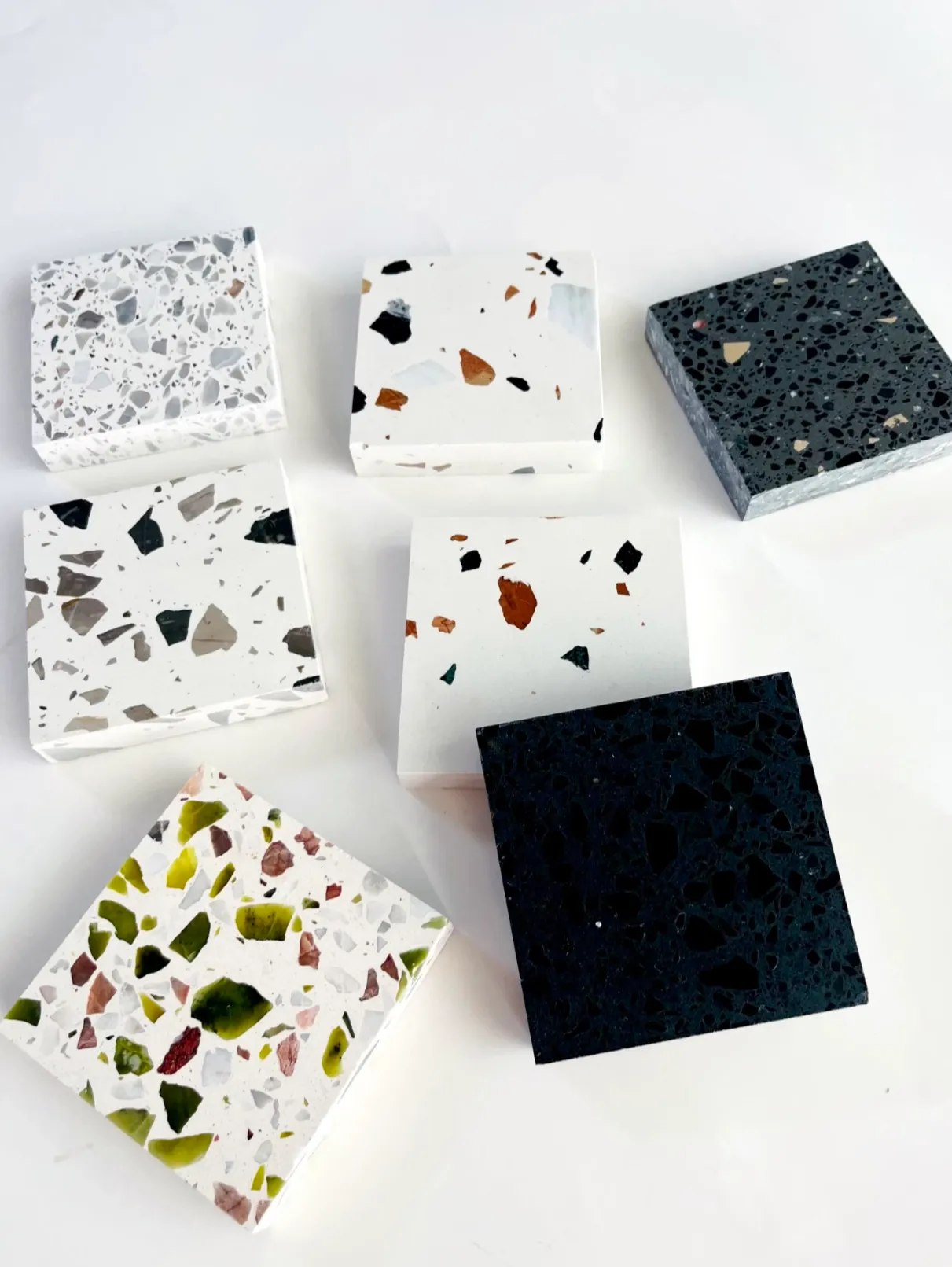
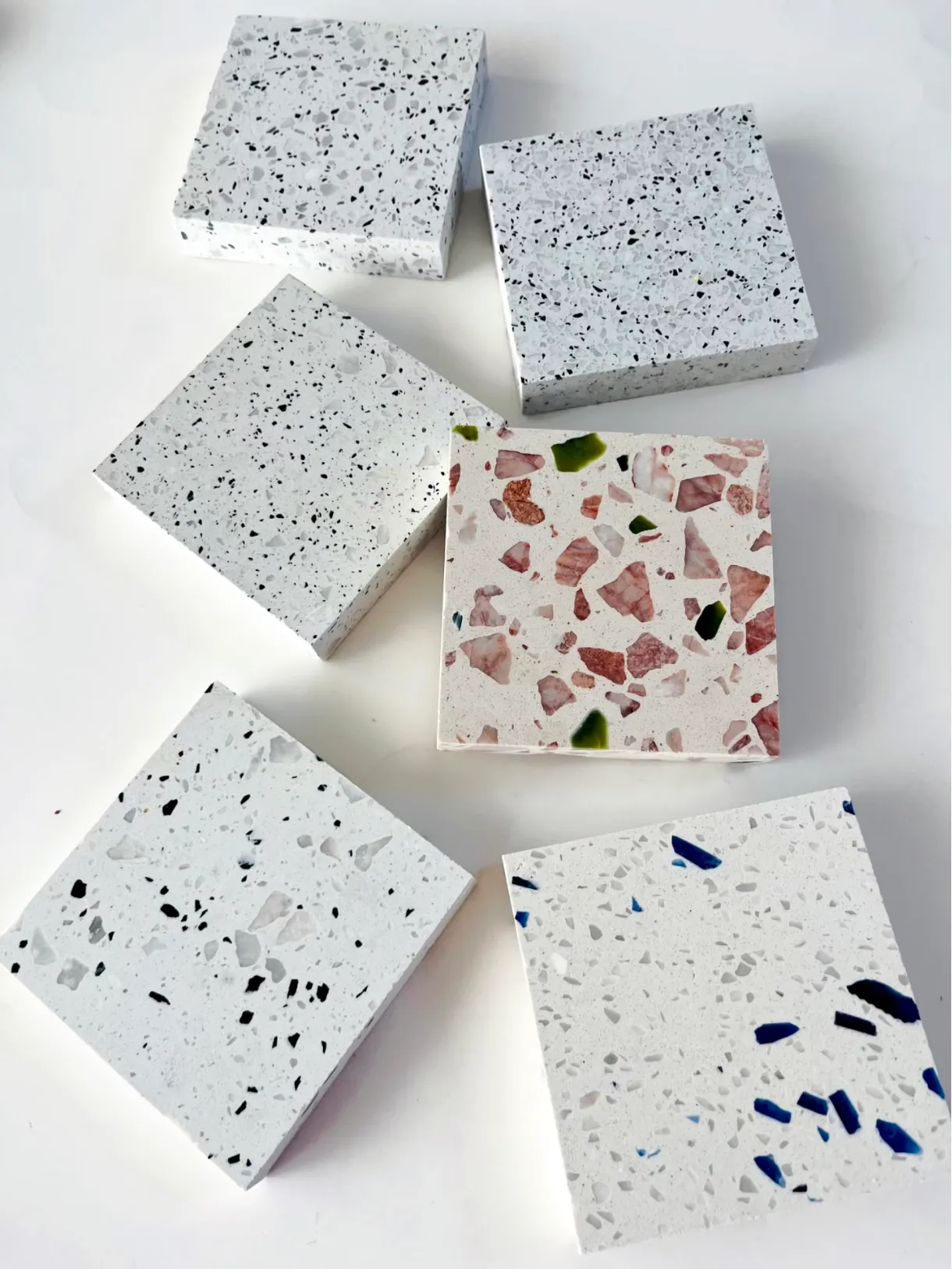
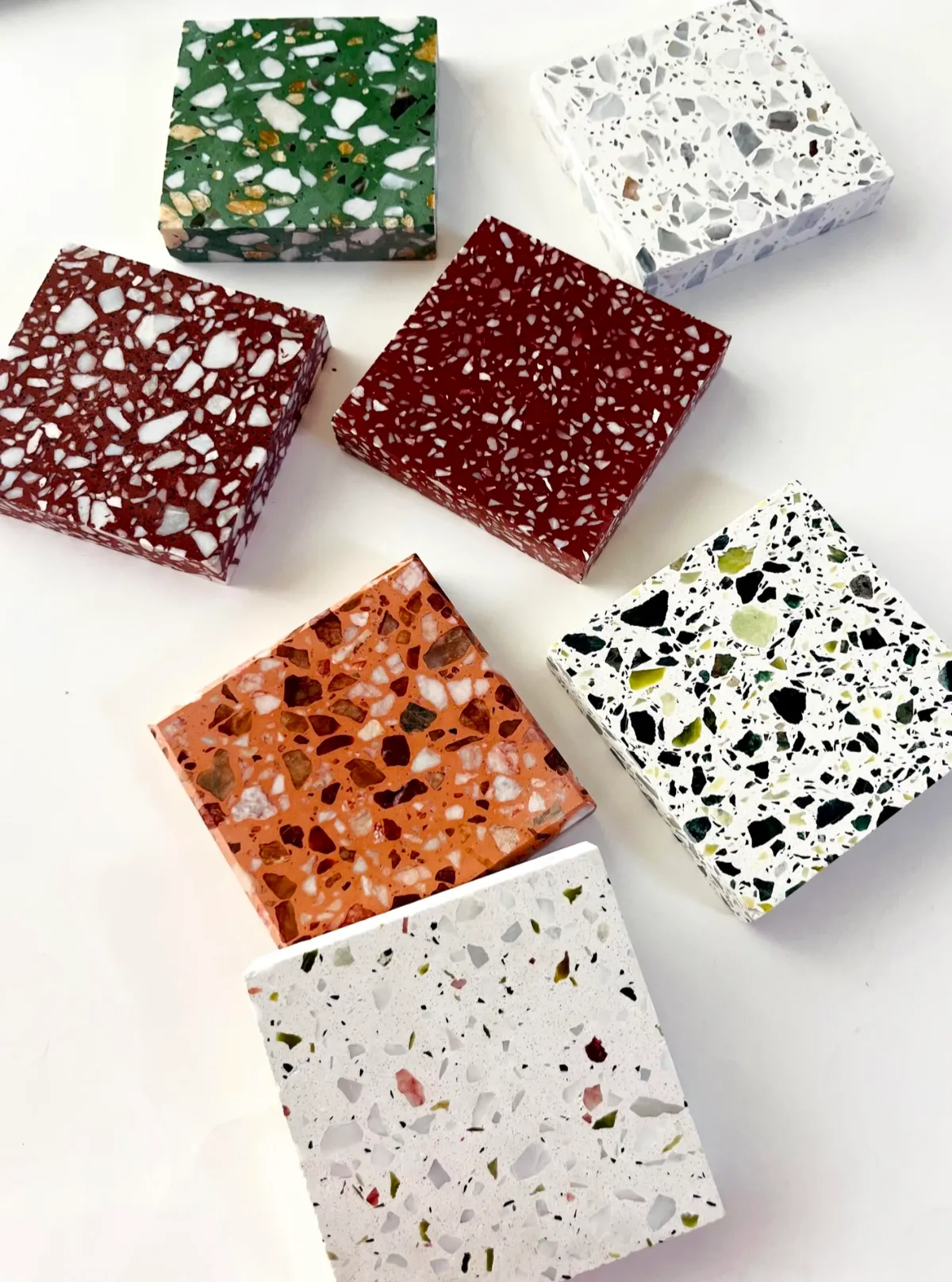
Jia Ni takes you to learn about the factory's prefabricated terrazzo
Factory precast terrazzo is manufactured in factories with modern processing equipment, generally through procedures including material distributing, vibrating, high-pressure pressing, curing and cutting. It features high controllability and is finished into single sheets, which are easy to transport and mature in construction. Its construction method is similar to that of ceramic tiles and marble, making it applicable to various scenarios.
Advantages
Produced by precision equipment with stable quality and uniform performance; it boasts high density and strength while maintaining low water absorption.
Assembly line production enables mass replication with higher efficiency.
Convenient transportation and storage, easy construction, minimal impact on cross-operation, effectively ensuring overall construction schedule.
Versatile application on walls, staircases and countertops.
Simple later maintenance and replacement.
Disadvantages
Limited specifications lead to obvious joints after laying.
Color difference tends to occur among products of different batches.
Product quality is largely affected by production equipment and craftsmanship.
Common Problems
Dark gaps easily appear at joints.
Standardized construction operation is required; improper laying may cause hollowing and cracking.
Factory precast terrazzo is divided into block pressing type and slab pressing type, each with distinct characteristics:
Block Pressing Type
Large-capacity molds are adopted to press mixed raw materials into cubic blocks similar to natural stone blocks, which are later cut into finished slabs as required. It allows great flexibility in slab thickness. Thanks to the large original blocks, large-size aggregates can be adopted to customize products with bold patterns.
Nevertheless, a huge amount of raw materials are used in single block pressing, which may result in insufficient mixing, uneven pattern distribution and inconsistent physical properties. Uneven pressure on the surface and core of blocks also leads to inconsistent density, making unified product quality hard to guarantee. Besides, finished slabs are mostly limited to the size of 2400×1200mm with slightly inferior physical properties.
Slab Pressing Type
Single-slab molds are used for one-step forming, including standard-size slab molds and large-size slab molds. With less raw materials used per pressing and restrictions from molds, oversized aggregates cannot be applied. In contrast, raw materials are mixed more evenly; lower pressing force and uniform stress endow products with superior and stable physical properties and higher processing efficiency.
Restricted by molds, this type cannot realize patterns with extra-large aggregates, and its thickness is fixed, generally ranging from 12mm to 40mm.
If you want to learn more about stone knowledge, please feel free to contact us.