
Classification and application of artificial stone materials
2026-06-11
1. Resin-Based Artificial Stone
Resin-based artificial stone uses unsaturated polyester resin as the binder. It is blended at a specific ratio with crushed natural marble, quartz sand, calcite, stone powder and other inorganic fillers, followed by the addition of additives including catalysts, curing agents and pigments. It is manufactured through processes such as mixing and stirring, curing forming, demoulding, drying and surface polishing.
Products made with unsaturated polyester feature high gloss, vivid and diverse colors, excellent machinability and outstanding decorative effects. This resin has low viscosity for easy moulding and can cure at ambient temperature. Forming techniques include vibratory moulding, compression moulding and extrusion moulding. Resin-based artificial stone is the primary type adopted for indoor decoration projects.
2. Composite Artificial Stone
The binder for composite artificial stone contains both inorganic materials and organic polymer materials. Its production process is as follows: first, a cement mortar green body is made from cement and stone powder; the green body is then soaked in organic monomers to undergo polymerization under specific conditions.
For slab products, the base layer adopts low-cost inorganic materials with stable performance, while the surface layer is composed of polyester and marble powder. Available inorganic binders include rapid-hardening cement, ordinary Portland cement, aluminate cement, fly ash cement, slag cement and plaster of Paris. Usable organic monomers consist of styrene, methyl methacrylate, vinyl acetate, acrylonitrile, butadiene, which can be applied individually or in combinations. Composite artificial stone boasts low production cost, yet its polyester surface is prone to peeling or cracking under temperature fluctuation.
3. Cement-Based Artificial Stone
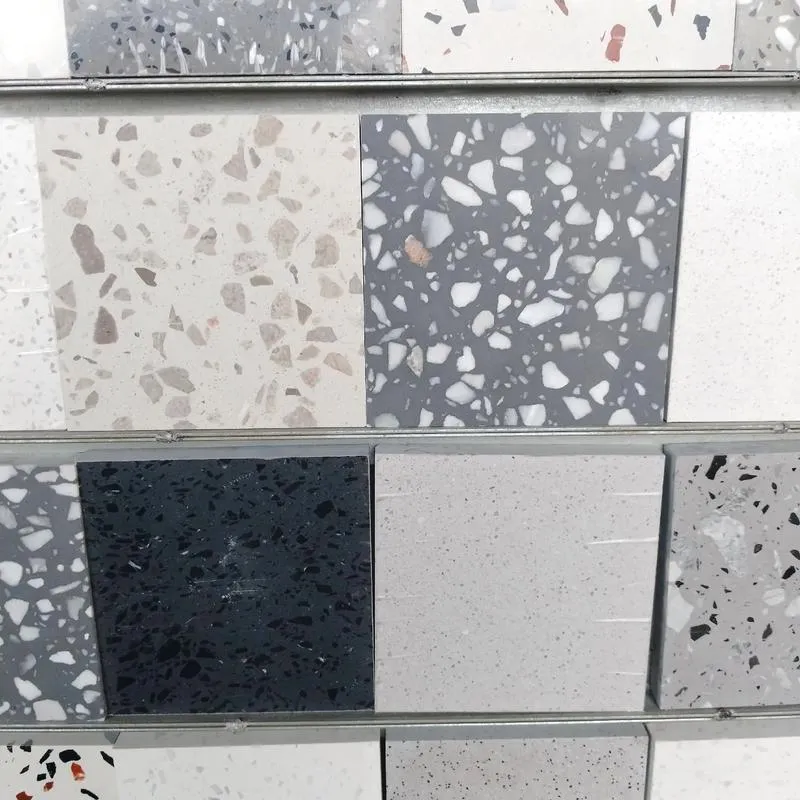
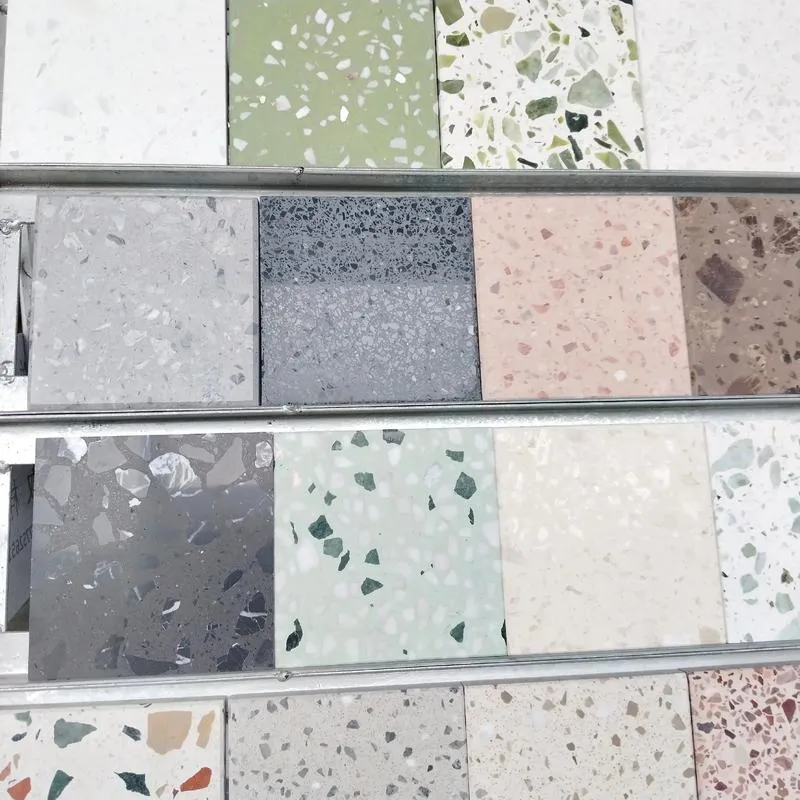
Cement-based artificial stone takes various cements as binders, with sand and natural stone grit as fine and coarse aggregates. It is produced via batching, mixing, pressure steam curing, grinding and polishing. Coloured cement stone can be produced by adding pigments during batching. This type of artificial stone features accessible raw materials and low price, yet mediocre decorative performance. Terrazzo and various patterned paving bricks fall into this category.
4. Sintered Artificial Stone
The manufacturing process of sintered artificial stone resembles ceramic production. It is produced by mixing fine powders of feldspar, quartz, diabase, calcite, hematite powder and a certain proportion of kaolin. The typical mixing ratio is 60% stone powder and 40% clay. Raw slip is prepared via slurry mixing, formed by semi-dry pressing, and then fired in a kiln at roughly 1000°C.
Sintered artificial stone has superior decorative performance and stable physical properties. However, high-temperature firing leads to high energy consumption and high production costs.
General Conclusion
Thanks to the merits of unsaturated polyester resin — low viscosity for easy forming, high gloss, pale base tone convenient for formulating various bright colours and veins, fast curing and room-temperature operation — resin-based artificial stone bonded with unsaturated polyester resin is the most widely used type among the four categories above. With stable physical and chemical properties and wide application scope, it is also named polyester engineered stone.
If you want to learn more about stone knowledge and information, please feel free to contact us.