Waterjet mosaic--what is waterjet
2026-06-26
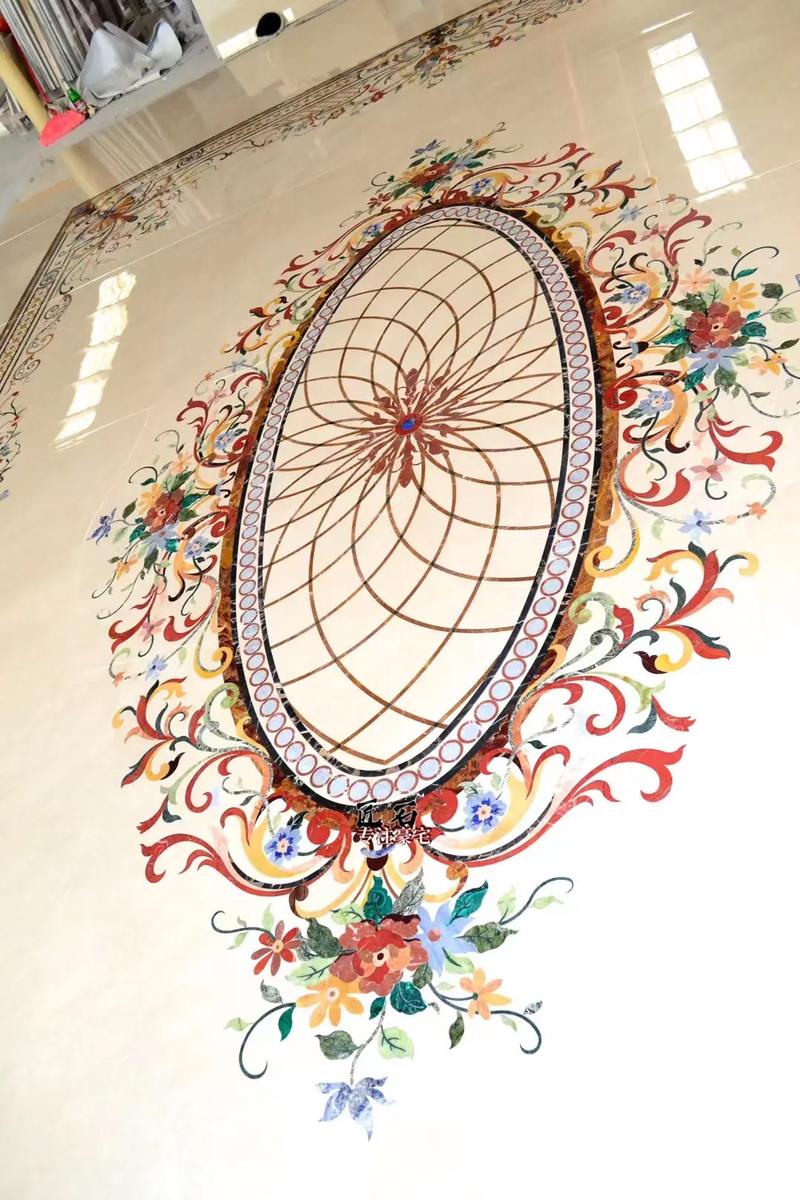
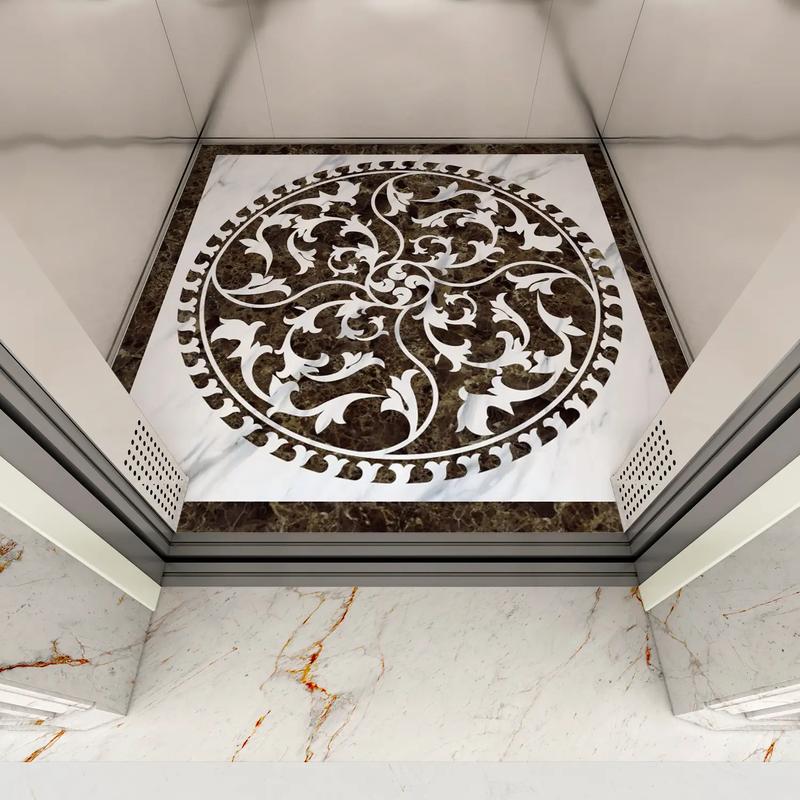

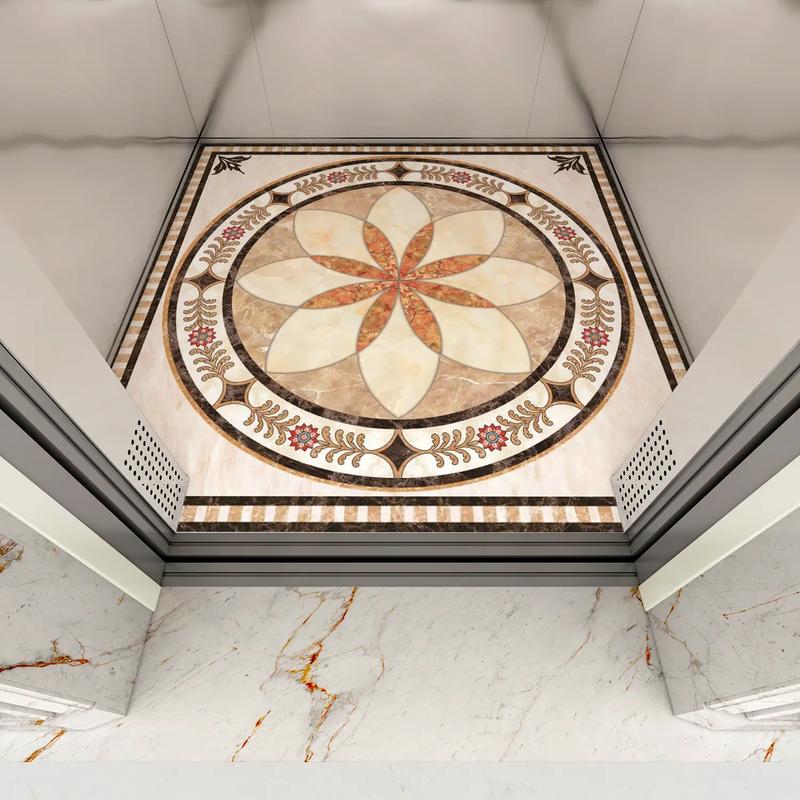
Since ancient times, humans have harnessed the impact force of flowing water to create hydraulic machinery such as water wheels and water mills. Water jetted from high-pressure water guns delivers far greater impact power. The former Soviet Union applied this principle to coal mining, developing hydraulic coal mining technology. When high-speed water jets hit coal seams, their velocity plummets, instantly generating tremendous impact force that triggers brittle fracturing in coal layers to complete coal extraction. Inspired by this, Soviet scientists pioneered the high-pressure water jet cutting technology, which was later patented and commercialized by American corporations.
Ordinary water is fed into an ultrahigh-pressure intensifier and pressurized to 4,000 bar (60,000 psi). It then passes through a tiny nozzle with a diameter ranging from 0.004 to 0.016 inches, forming a water arrow traveling at 915 meters per second — roughly three times the speed of sound. This water arrow is suitable for various surface treatments and cutting non-metallic materials including paper, disposable diapers, glass, fibers, foams, and more.
For cutting metals and harder materials such as stone, glass, ceramics and tiles, Flow International Corporation developed an improved patented design: mixing abrasive grit into the water jet to boost cutting capacity. This high-speed abrasive waterjet can cut nearly all types of materials.
Stringent requirements apply to the water, pipelines and nozzles to achieve this performance. Take pipelines as an example: waterjets rely on high-pressure equipment to pressurize water for cutting hard materials, so pipelines must withstand extreme pressure well above 700 megapascals — thin steel sheets, the workpiece to be cut, can already endure 700 MPa of pressure on their own.
Secondly, it is incorrect to assume completely impurity-free water is used for waterjet cutting. At pressures far exceeding 700 MPa, pure water will erode and cause leakage in pipeline sealing components no matter how well they are sealed. To address this issue, 5% soluble emulsified oil is added to the process water to enhance sealing performance. Additional oil additives are also introduced into high-pressure pumps to improve their tightness.
As mentioned earlier, waterjet nozzles are manufactured from hard alloys, sapphire and other premium materials. Their orifices measure merely 0.05 millimeters in diameter with ultra-smooth inner walls, capable of withstanding 1,700 MPa of pressure. This enables the ejected high-pressure water to slice through materials like a blade. Certain process water formulations incorporate long-chain polymers such as polyethylene oxide to increase water viscosity, shaping the jet into a thin, continuous stream.
Waterjet cutting delivers exceptional machining precision, with cut kerfs measuring only 0.1 to 0.8 millimeters wide, making it ideal for fabricating complex contoured components. Workpieces feature smooth, uniform cut edges requiring no secondary finishing. It boasts unique advantages especially when processing materials prone to thermal deformation.
Unlike solid cutting tools, waterjets suffer no blade wear. The abrasives mixed into the jet and wastewater can be recycled. The equipment structure is relatively simple, translating to low processing costs. Machining generates minimal vibration and noise; swarf output accounts for just 15% to 20% of that from conventional mechanical cutting. All debris washes away with the water stream, eliminating airborne particles that could harm operators.
The waterjet owes its wide-ranging applicability precisely to the fact that it contains no solid cutting blade. Cutting composite materials has long posed a major challenge in manufacturing: traditional machining methods cause delamination and tearing, whereas waterjets serve as the optimal solution to this problem. When stripping ceramic coatings from parts, waterjet treatment outperforms both mechanical grinding and chemical stripping. Waterjets are also deployed for hole punching and material crushing. Additionally, they excel at cleaning marine growth on hulls and propellers, as well as scale buildup inside chemical pipelines.