
The key to ground stone maintenance in stone care
2026-08-12
Shanghai Jiani Material Technology is a professional company specializing in the production of stone tiles.
Flooring is one of the major application areas of stone in architectural decoration. Floor‑stone maintenance plays a vital role in the routine upkeep of buildings. The key to effective floor‑stone maintenance lies in correct awareness, scientific methods and a reasonable maintenance frequency. Correct awareness means adopting the philosophy of pre‑installation prevention, in‑service protection and remedial restoration, with maintenance running through the whole service life of the stone. Scientific methods refer to proper construction and operating procedures. A reasonable frequency means carrying out maintenance at appropriate intervals — neither too frequently nor after excessively long gaps.
Pre‑installation Prevention
Preventive treatment must be carried out before stone maintenance construction. Apply a permanent protective sealer on all six faces of each stone slab. These sealers are usually highly penetrative materials that block the micro‑pores on the stone surface. After sealing, external contaminants cannot penetrate into the stone. Internal bacteria and moisture are isolated from air and therefore cannot trigger stone‑related deterioration.
In‑service Protection
Abrasion and damage to floor stone are mainly caused by grit and sand carried in on shoe soles. Installing dust‑control entrance mats to intercept contamination and remove grit before it enters the building is an efficient way to preserve surface gloss and lower maintenance costs. Dust is tracked indoors on footwear during daily walking; in humid weather the amount of tracked‑in dust rises by 12–15 times compared with normal conditions. When pedestrians walk more than seven steps on entrance mats, over 90 % of dust can be removed from shoe soles. However, the basic size of dust‑control mats must be carefully determined: only a sufficient walking distance can guarantee adequate removal of grit from footwear. Dust‑control mats cannot be cleaned continuously, so their soil‑holding capacity also needs to be considered. Once the mats become saturated with dirt, accumulated dust and sand will be released onto the mat surface and may be carried further indoors by subsequent pedestrians. During rainy weather, enlarge the covered area of dust‑control mats and increase their cleaning frequency.
Remedial Restoration
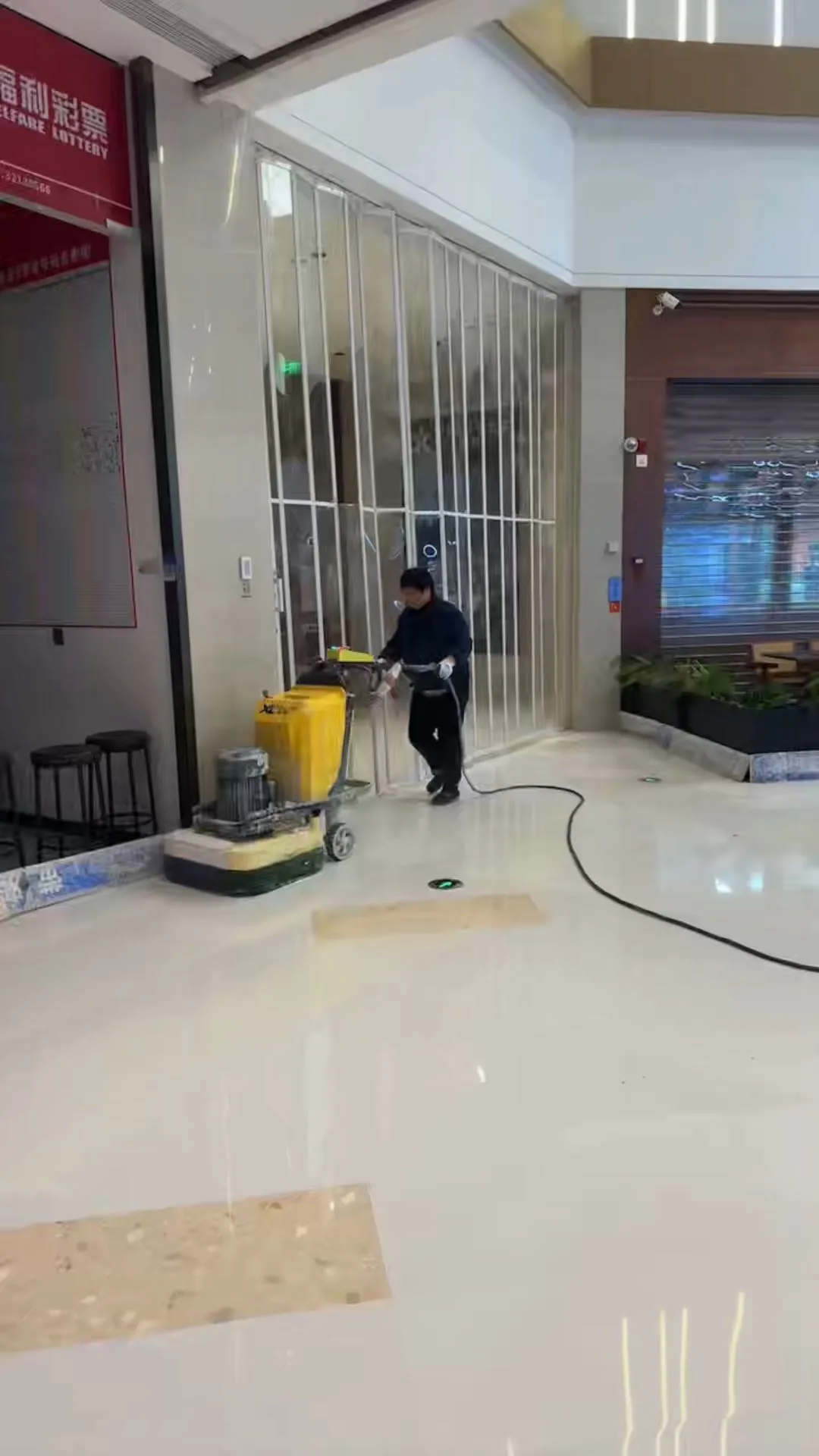
Despite preventive and protective measures, minor surface damage still occurs under certain environmental and operating conditions and requires remedial treatment. In the past, routine cleaning together with waxing and polishing was the common practice. Nevertheless, waxing involves complicated procedures, high costs and considerable loss of the stone’s natural gloss. The wax film wears away quickly, resulting in short maintenance cycles and heavy labour input. Nowadays, stone crystallization treatment is widely used for stone renovation and surface protection after deterioration remediation.