
Several issues to note for waxing and other stone protection
2026-09-02
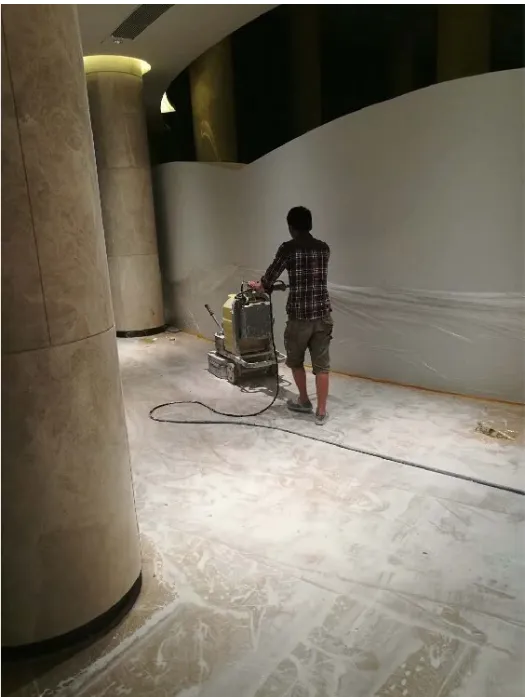
Waxing was once a widely‑adopted method for stone protection, mostly applied on installed stone floors. Nevertheless, its protective performance is limited. It features poor weather resistance, unsatisfactory anti‑fouling capacity and tends to trap dust. Nowadays, it has also been found that waxing may cause damage to stone materials. As a non‑breathable sealing protective layer applied onto stone surfaces, wax seals the stone micropores. Moisture trapped inside and behind the stone cannot evaporate. Long‑term moisture accumulation inside the stone will trigger stone‑related diseases. There is another type of liquid wax commonly painted on interior wall surfaces. Being a film‑forming material, its major drawback is that it impairs the natural texture of stone.
The emergence of penetrating protective agents marks a major advance in the research and development of stone‑protection products, though such products have not been widely applied for a long time in China. Mostly solvent‑based or water‑borne, these products carry effective waterproof ingredients deep into the stone substrate to form an in‑depth protective barrier, repelling water and liquid contaminants. Penetrating protective agents preserve the stone’s natural texture as well as its breathability, delivering superior and technically sound performance. Performance in waterproofing, anti‑fouling and oil‑repellency varies among different products due to raw‑material differences, yet most products provide satisfactory results.
When selecting and applying stone‑protection products, apart from understanding product performance, the following points shall be observed:
(1) Compatibility. Select products that exert no influence on stone color. For wet‑lay installation, test whether the back‑surface treatment will weaken bonding strength between stone and cement mortar.
(2) For wet‑lay construction, adequate protection shall be carried out on the back and side faces of stone panels. Priority shall be given to protective agents with excellent waterproof performance.
(3) For floor stone protection, waterproof treatment shall be completed for back and side surfaces. Appropriate front‑surface protection shall also be implemented according to service environments. For special premises such as hospitals, high‑performance anti‑fouling products are preferred. For hotels, protective agents with good anti‑fouling and oil‑repellent properties shall be selected.
(4) Back‑surface protection is of limited significance for dry‑hung stone cladding. Front‑face protection may be conducted with suitable protective agents according to service conditions and stone characteristics.
(5) For stone prone to deterioration, such as grey‑white granite and marble that are susceptible to rust efflorescence and yellow staining under humid conditions, waterproof treatment shall be emphasized, and protective agents with outstanding waterproof performance shall be adopted.
(6) For porous granite and marble with high water‑absorption rate used in public areas, products with reliable waterproof, anti‑fouling and oil‑repellent performance must be chosen. Contaminants can then be easily cleaned once they occur.