
Surface brightening treatment for stone materials
2026-10-16
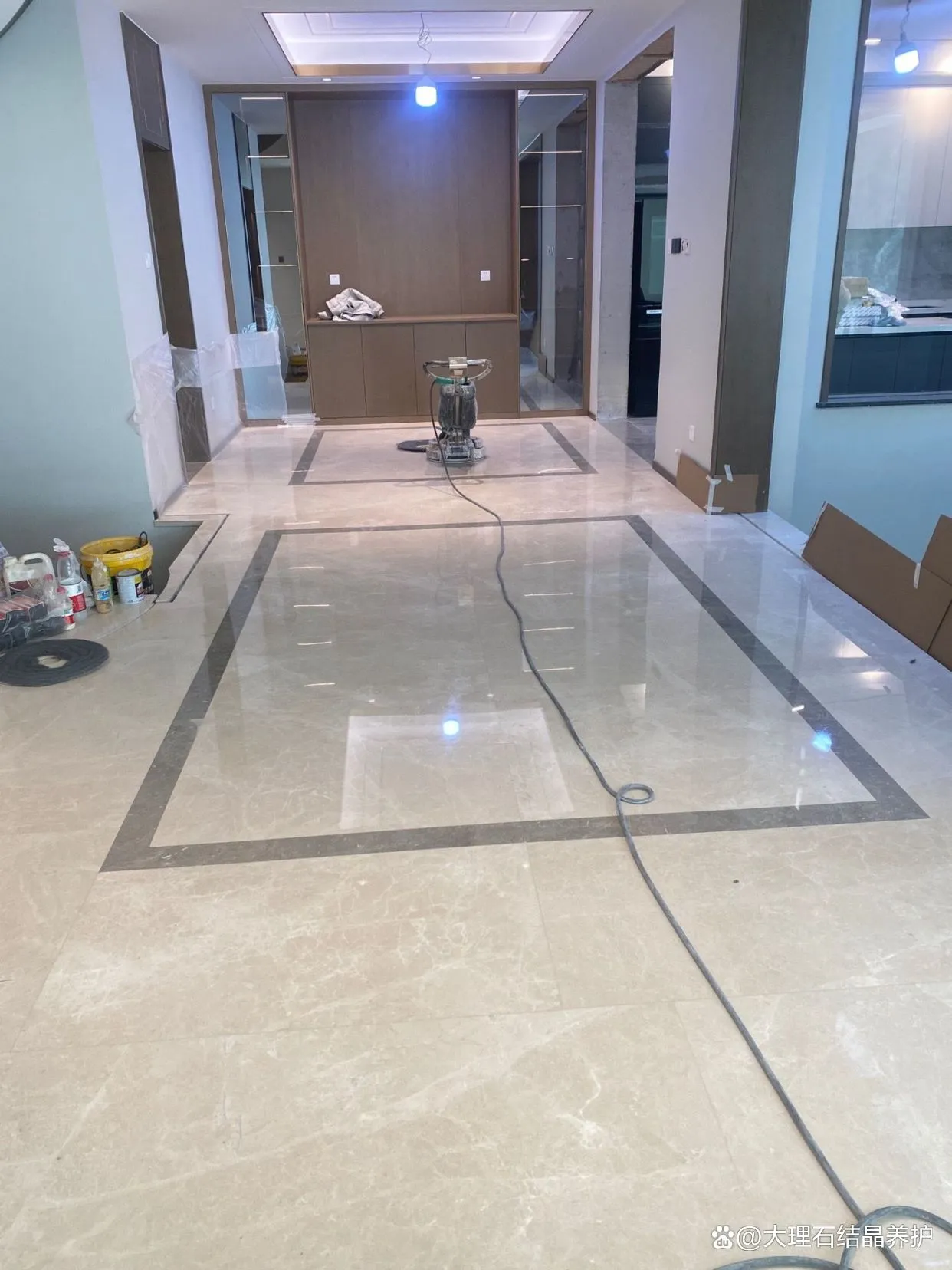
Since the Roman era, stone‑polishing abrasives have been made from a mixture of fine sand, salt (chemical compounds) and plant‑based fibres. These materials were used to abrade stone surfaces to achieve a glossy finish.
As times evolved, modern Europe has seen advances in grinding machinery and the adoption of diamond polishing technology. Different diamond grit sizes, together with metal or resin bond systems, are deployed to develop gloss on stone surfaces. A wide variety of grinding abrasives with diverse formulations are available on the market. Most core components are grinding powders, such as silicon carbide powder and diamond powder. Silicon‑carbide abrasives must be formed into hard spherical particles for matching application. Diamond powder is a widely‑used modern abrasive; it is shaped into spherical grains and bonded with resin or metal matrices for practical use.
Current methods for producing gloss on stone surfaces include waxing, crystallisation treatment (polishing‑and‑hardening treatment), polishing powders, and crystal polishing slurries.
Numerous wax‑based gloss‑enhancing products exist commercially. They generally form an extremely thin surface layer that lacks durability and scratches easily. Repeated wax applications can build up a thicker wax layer for stain resistance. Nevertheless, wax material is relatively soft, prone to peeling and ageing, and most waxes will turn yellow over time. Moreover, wax seals the stone surface, trapping internal vapour and moisture inside the substrate, which may eventually cause stone deterioration. Wax deposits require regular stripping and re‑waxing. Stripping pads and chemical wax removers can inflict severe damage to the stone surface.